The rapid growth of computational power and data availability is facilitating a significant growth in quantitative methods for medical care. This workshop will highlight state-of-the-art developments in quantitative methodologies that drive innovation across key areas of healthcare. Building on the foundational themes of the 2023 Long Program on Mathematics, Statistics, and Innovation in Medical and Health Care, the workshop will center on advancing analytical and data-driven methods for medical care, healthcare delivery, and health policy.
Through a multidisciplinary lens, participants will examine how AI-powered approaches are enabling earlier and more accurate disease detection, preventive care, and breakthroughs in screening processes. The workshop will also focus on recent advances in precision and personalized medicine, exploring how quantitative models can tailor treatments to individual patient responses and preferences even under uncertainty. The evolving landscape of digital healthcare will also be a central theme, including advancements in telemedicine, remote care technologies, and strategies for ensuring data privacy. Additionally, participants will engage with operational and financial innovations in optimizing hospital workflows, emergency care, and resource allocation.
Beyond technical solutions, the workshop will address the critical policy and funding challenges associated with these innovations, offering insights into how regulatory frameworks can evolve to support a rapidly advancing healthcare ecosystem. By convening experts from mathematics, statistics, data science, medicine, and public health, this workshop aims to foster interdisciplinary collaboration and accelerate progress toward a healthcare system that is more effective, accessible, equitable, and efficient.
Lightning Talks
This workshop will include lightning talks for early career researchers (including graduate students). In order to propose a lightning talk, you must first register for the workshop, and then submit a proposal using the form that will become available on this page after you register. The registration form should not be used to propose a lightning talk.
The deadline for proposing is November 30, 2025. If your proposal is accepted, you should plan to attend the event in-person.
Space-Time-Meta Causal Inference: A Weighting Perspective
Speaker: Jose Zubizarreta (Harvard University)
11:30-11:45 CST
Q&A
11:45-12:15 CST
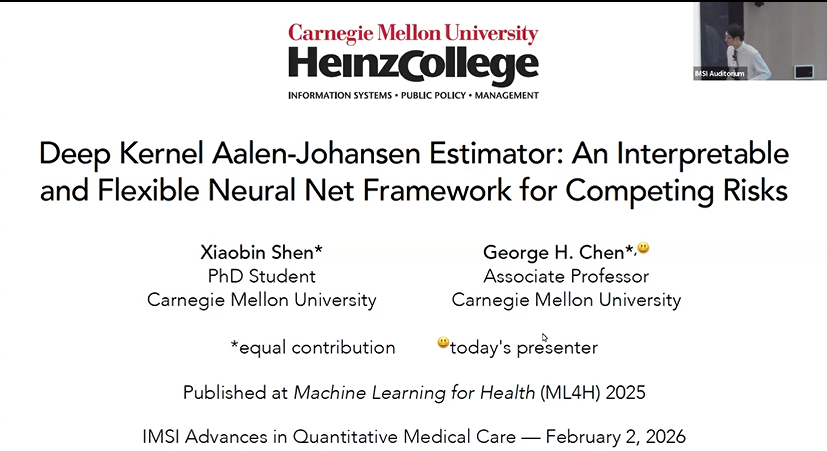
Deep Kernel Aalen-Johansen Estimator: An Interpretable and Flexible Neural Net Framework for Competing Risks
Speaker: George Chen (Carnegie Mellon University)
12:15-12:30 CST
Q&A
12:30-13:30 CST
Lunch Break
13:30-14:00 CST
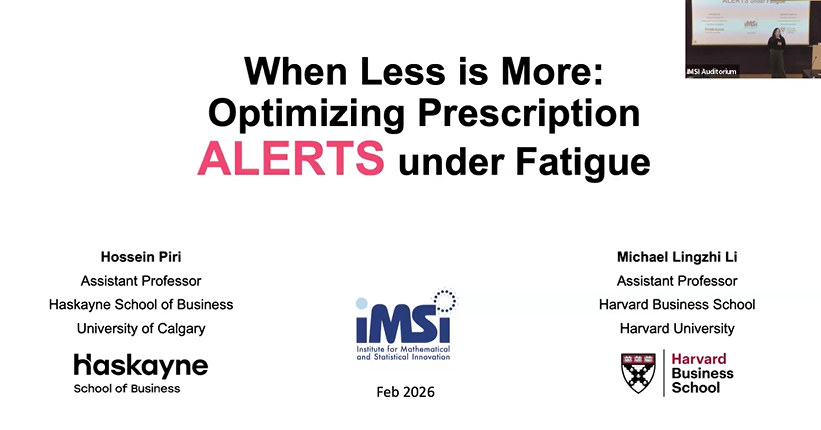
When Less is More: Optimizing Prescription Alerts under Fatigue
Speaker: Hossein Piri (University of Calgary)
Pharmacists play a central role in preventing medication errors, aided by Computerized Provider Order Entry (CPOE) alert systems that flag potential drug interactions and contraindications. However, to capture risks, these systems generate high volumes of alerts, which can cause alert fatigue and reduce responsiveness to critical warnings.
This study develops a fluid optimization framework for CPOE alert design that explicitly models pharmacist fatigue. A key challenge is the dynamic feedback loop: each alert contributes to fatigue, which in turn diminishes responsiveness to future alerts. We show the optimal policy has a decreasing-threshold structure—initially selective, then more permissive as fatigue accumulates. We also find that a fixed-threshold policy is asymptotically optimal for a wide class of distributions.
We evaluate our approach using four years of hospital alert data. We find the proposed policies reduce alert volume by up to 50% and patient risk by over 40% compared to current practice. In particular, improper responses to life-threatening alerts drop by 37%, which translates to saving 1,839–4,429 lives and $322–$666 million in cost across the U.S. These results demonstrate that accounting for human cognitive limitations in decision-support systems can yield substantial improvements in patient safety and system efficiency.
14:00-14:15 CST
Q&A
14:15-14:45 CST
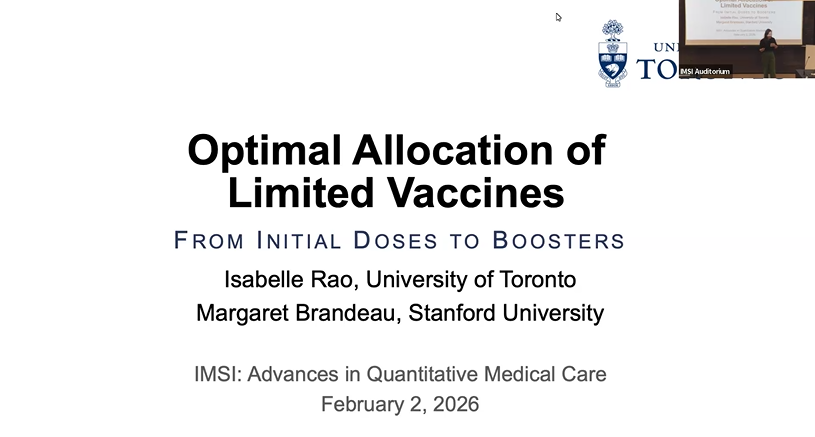
Optimal Allocation of Limited Vaccines: From Initial Doses to Boosters
Speaker: Isabelle Rao (University of Toronto)
Policy makers make consequential choices on how to allocate limited health resources to improve population health. My research aims to find avenues to optimize the use of these resources. My talk addresses how to optimally allocate a limited vaccine supply over time, across population subgroups and between initial and booster doses, to control the spread of an infectious disease. By approximating epidemic dynamics, I develop simple analytical conditions characterizing the optimal vaccine allocation for four different objectives. I show that the approximated solution is an all-or-nothing allocation based on a prioritized list of population groups given by the analytical conditions. I illustrate my method with an example of COVID-19 vaccination, calibrated to epidemic data from New York State. Numerical computations show that my method achieves near-optimal results over a wide range of scenarios. Although black-box models are prevalent in the literature, my work shows that accuracy need not be sacrificed for interpretability. My methods provide practical, intuitive and accurate tools for decision makers as they allocate vaccines over time.
14:45-15:00 CST
Q&A
15:00-15:30 CST
Coffee Break
15:30-16:30 CST
Lightning Talks
Presenters
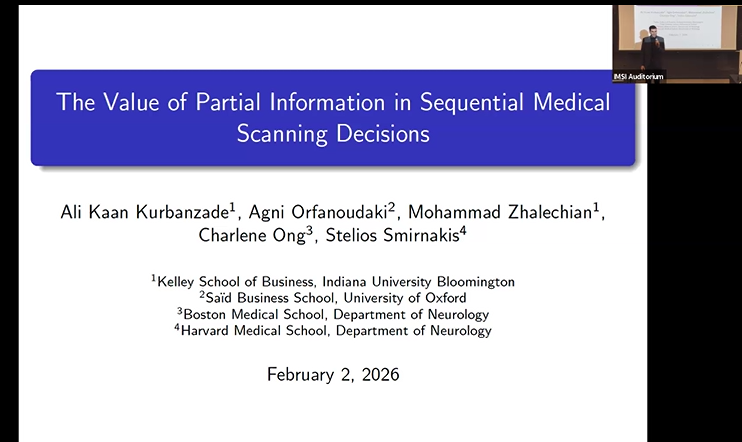
Ali Kaan Kurbanzade, Indiana University
Pinelopi Stamou, University of Oxford
Alyssa Liu, New York University
Angel Chung, University of Pennsylvania
Tuesday, February 3, 2026
8:30-9:00 CST
Breakfast/Check-in
9:00-9:30 CST
Operations Planning for Public Health Surveillance
Speaker: Nan Liu (Boston College)
Public health surveillance refers to “the continuous, systematic collection, analysis and interpretation of health-related data needed for the planning, implementation, and evaluation of public health practice” (WHO 2012). In addition to traditional facility-based methods, modern surveillance efforts increasingly rely on online platforms, community-based reporting, and mail-based recruitment. A central operational challenge in these efforts is recruiting and serving enough participants within a targeted time frame to ensure unbiased estimation of population health status. In this talk, I will introduce a dynamic programming model to support decision-making in participant recruitment and service for public health surveillance. Using data from a large-scale study designed to assess HIV risk among American women, we demonstrate that our approach can substantially improve recruitment efficiency and reduce associated costs.
9:30-9:45 CST
Q&A
9:45-10:15 CST
Multimorbidity Analytics – Disease Progression and Treatment Pathways for Chronic Conditions
Speaker: Rema Padman (Carnegie-Mellon University)
An ever increasing number of people worldwide are affected by multiple chronic conditions. The increasing deployment and usage of clinical information systems and the resulting availability of vast amounts of detailed patient data in electronic databases are challenging our ability to utilize them effectively at the point of decision-making. Tracking the progression of disease and identifying high-risk patients with multi-morbid conditions offer new opportunities for applying innovative data-driven approaches for risk stratification and outcomes prediction with improved prediction accuracy, interpretability, and bias mitigation. We leverage the availability of a rich and unique multi-year clinical dataset to investigate how multimorbid conditions such as Chronic Kidney Disease evolve over time from the onset of a particular stage for an identified patient population into distinct trajectories of disease development. We further predict serious adverse outcomes such as End Stage Renal Disease using deep learning methods applied to integrated clinical and claims data with varying observation windows. Despite the outstanding performance of deep learning models in clinical prediction tasks, explainability remains a significant challenge. Inspired by transformer architectures, we introduce the Temporal-Feature Cross Attention Mechanism, a novel deep learning framework designed to capture dynamic interactions among clinical features across time, enhancing both predictive accuracy and interpretability, and providing multi-level explainability by identifying critical temporal periods, ranking feature importance, and quantifying how features influence each other across time before affecting predictions. These studies present a robust framework for multimorbidity analytics to improve clinical decision-making and patient health outcomes.
10:15-10:30 CST
Q&A
10:30-11:00 CST
Coffee Break
11:00-11:30 CST
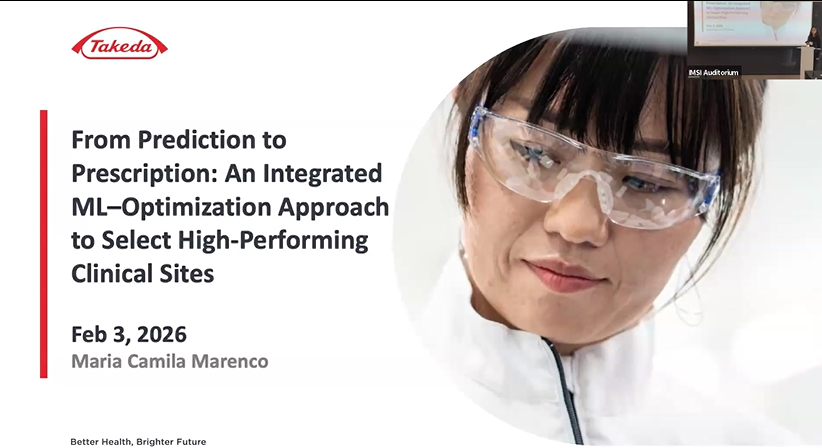
From Prediction to Prescription: An Integrated ML–Optimization Approach to Select High-Performing Clinical Sites
Speaker: Maria Camila Marenco (Takeda Pharmaceuticals)
Selecting the right clinical sites is one of the most critical drivers of trial success, yet current approaches rely heavily on expert judgment. This work presents an end-to-end analytics framework that integrates machine-learning prediction with dynamic optimization to improve clinical site selection at Takeda. Using over 14,000 historical site-study observations and ~140 study and site characteristics, we developed models that accurately predict the probability that a site will be non-enrolling, classify enrollment performance tiers, and estimate the time-to-enrollment inflection point. These predictions feed into a mixed-integer optimization engine that recommends the optimal subset of sites for a given study, balancing expected enrollment and operational constraints such as geography and cost. his talk will share the methodology, predictive drivers, optimization logic, and key learnings from early implementation.
11:30-11:45 CST
Q&A
11:45-12:15 CST
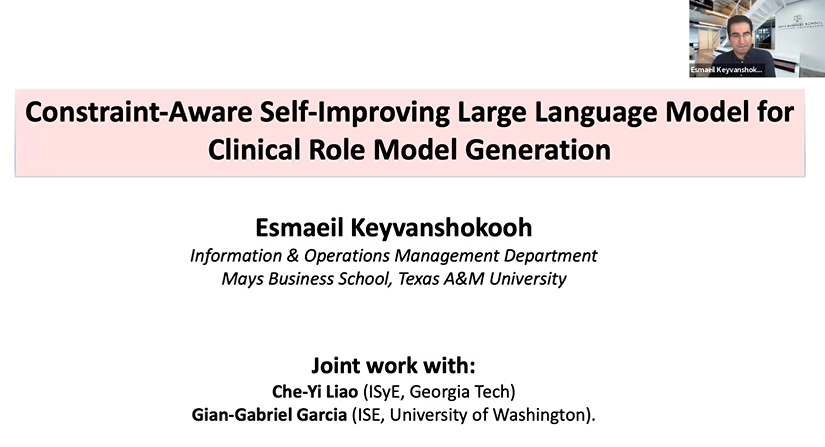
Constraint-Aware Self-Improving Large Language Model for Clinical Role Model Generation
Speaker: Esmaeil Keyvanshokooh (Texas A&M University, College Station)
Personalized medicine uses Clinical Role Models (CRMs)-individuals with similar health profiles-to build patient trust. However, CRM identification is challenged by data scarcity and privacy constraints. While Medical Large Language Models (MLLMs) can synthesize CRMs, they risk generating invalid "hallucinations" and face inconsistencies from evolving risk-scoring tools. We propose CASE (Constraint-Aware active SElfimproving fine-tuning), which integrates data-driven optimization with MLLM's generative capabilities to produce reliable CRMs. CASE employs a robust-optimization-based verifier to ensure CRMs are clinically valid, meeting patient requirements and reducing risk. Verified examples are then used to fine-tune the MLLM in a self-improving loop. We developed an active learning algorithm with utility-driven sampling and provide rigorous theoretical guarantees including high-probability sublinear regrets of the learning algorithm and patient safety guarantees of CASE. From clinical and survey data, we found that generated CRMs outperform real CRMs by >130% in reliability and 23% in Effort-to-Change reduction. We also found that a clear learning signal determines the outcomes of the fine-tuned model. Our work presents a novel integration of data-driven optimization and generative AI to enhance trust and decision-making in personalized medicine.
12:15-12:30 CST
Q&A
12:30-13:30 CST
Lunch Break
13:30-15:00 CST
Panel: Career Panel
Panelists:
George Chen (Carnegie Mellon University), Jing Dong (Columbia University), and Nan Liu (Boston College)
15:00-15:30 CST
Coffee Break
15:30-16:30 CST
Lightning Talks
Presenters
Xueqing Liu, Harvard University
Sina Ansari, DePaul University
Bogdana Jelic, University of Oxford
Wednesday, February 4, 2026
8:30-9:00 CST
Breakfast/Check-in
9:00-9:30 CST
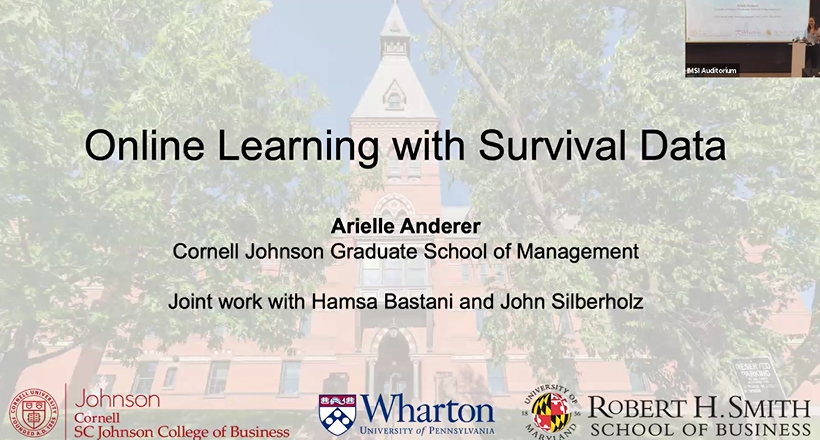
Online Learning with Survival Data
Speaker: Arielle Anderer (Cornell University)
Often, decision makers perform online learning with a time-to-event outcome, in which the goal is to increase or reduce the amount of time until some event occurs. Examples span disciplines from marketing (e.g. testing interventions to increase the length of time a customer subscribes) to healthcare (e.g. testing outreach modalities to reduce the time until a patient performs an overdue health screening). Time-to-event outcomes present challenges to multi-armed bandit algorithms, which typically expect the delay between giving an intervention and observing the outcome to be uninformative about the outcome itself. As a result, bandit algorithms for these outcomes often resort to dichotomization -- selecting a fixed time threshold and defining outcomes based on whether an event occurs before or after the selected threshold. We propose alternative bandit algorithms based on the Cox Proportional Hazards model. We analytically show that dichotomization can be very costly -- it can increase regret by 40% or more across a range of scenarios; the situation is even worse once we introduce uncertainty about the rate of outcomes. We numerically show robust benefits using a real-world dataset of time-to-event outcomes explored in healthcare screening.
9:30-9:45 CST
Q&A
9:45-10:15 CST
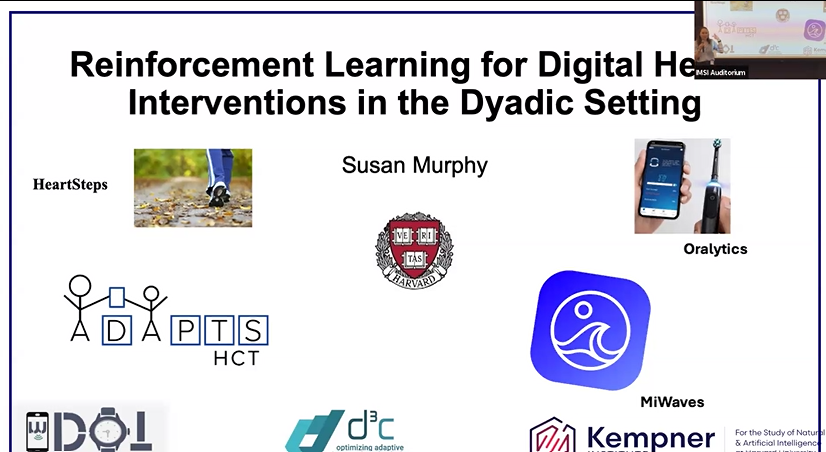
Reinforcement Learning for Digital Health Interventions in the Dyadic Setting
Speaker: Susan Murphy (Harvard University, Boston)
We present our ongoing work on the development of an online reinforcement learning (RL) algorithm for dyadic digital intervention settings in which the task for the RL algorithm is to assist the target person with a difficult illness be adherent to behavioral activities. To achieve this goal the RL algorithm will not only deliver digital interventions to the target person but also deliver interventions to assist the carepartner to manage caregiving burden and help the two individuals improve their relationship. That is, different RL components target different elements of the dyad. The RL algorithm is a multi-agent RL algorithm in which the 3 agents make decisions on the 3 elements of the dyad. We incorporate domain knowledge in the form of approximate causal directed acyclic graphs to speed up online learning in this sparse data setting. This work is motivated by our development of the online ADAPTS-HCT multi-agent RL algorithm, designed to improve medication adherence by young adults who have undergone a blood and bone marrow transplant. The online RL algorithm will be deployed in summer 2026.
10:15-10:30 CST
Q&A
10:30-11:00 CST
Coffee Break
11:00-11:30 CST
Improving Decision-Making in Resource Allocation: Evidence from Inpatient Admission Decisions
Speaker: Harriet Jeon (University of Pennsylvania)
11:30-11:45 CST
Q&A
11:45-12:15 CST
Is Continuity All We Need? A Modeling Approach to Evaluating Relational Continuity in Primary Care
Speaker: Yueyang Zhong (London Business School)
Relational continuity of care---the ongoing relationship between a patient and their regular physician---has been linked to better outcomes and lower consultation demand. Yet strict continuity constrains resource pooling, lengthens waits, and risks congestion in already stretched primary care systems. We study this tradeoff using a sequence of queueing models that capture how continuity decisions today influence future demand. The analysis shows that neither full continuity nor full pooling is optimal; instead, the best outcomes are achieved at intermediate levels of continuity. Extending the model to heterogeneous patients reveals that those with complex conditions benefit from high continuity, while non-complex patients should pool, yielding additional efficiency gains. When patients make their own decisions, equilibrium behavior can diverge from the socially optimal policy, underscoring the role of central coordination. We also examine a threshold-based scheduling rule that more closely reflects real practice and find it outperforms probabilistic assignment. Calibrating the model with NHS data, we show that under high utilitization, the optimal policy is to maintain near-universal continuity for complex patients while allowing pooling for others. These results challenge the presumption that "more continuity is always better" and offer quantitative guidance for designing continuity-aware scheduling policies in primary care.
12:15-12:30 CST
Q&A
12:30-13:30 CST
Lunch Break
13:30-15:15 CST
Lightning Talks
Presenters
Jimmy Qin, University of Texas, Dallas
Shouhao Zhou, Pennsylvania State University
Daiwen Zhang, University of Michigan
Abel Sapirstein, Georgia Institute of Technology
Jinglong Zhao, Boston University
Susobhan Ghosh, Harvard University
Vasiliki Stoumpou, Massachusetts Institute of Technology (MIT)
15:15-16:30 CST
Social Hour and Networking
Thursday, February 5, 2026
8:30-9:00 CST
Breakfast/Check-in
9:00-9:30 CST
Feature Selection for Machine Learning with Unstructured Data: Applications in Healthcare
Speaker: Kimberly Villalobos Carballo (New York University)
9:30-9:45 CST
Q&A
9:45-10:15 CST
Bridging the Gap: Implementing Al and Advanced Analytics in Real-World Healthcare
Speaker: Scott Wang (Harvard Medical School/Boston Children's Hospital)
10:15-10:30 CST
Q&A
10:30-11:00 CST
Coffee Break
11:00-11:30 CST
ML Compass: A Framework for Trustworthy AI Adoption in Healthcare Operations
Speaker: Vassilis Digalakis (Boston University)
11:30-11:45 CST
Q&A
11:45-12:15 CST
Predictive Analytics for the Management of Chronic Eye Disease
Speaker: Arlen Dean (Washington University in St. Louis)
12:15-12:30 CST
Q&A
12:30-13:30 CST
Lunch Break
13:30-15:00 CST
Panel: Research Panel
Panelists:
Sommer Gentry (New York University) and Rema Padman (Carnegie Mellon University)
15:00-15:30 CST
Coffee Break
15:30-16:30 CST
Lightning Talks
Presenters
Angela Lin, Massachusetts Institute of Technology (MIT)
Parshan Pakiman, SUNY Buffalo
Shakiba Rahnama, Illinois State University
Meghan Meredith, New York University Grossman School of Medicine
Friday, February 6, 2026
8:30-9:00 CST
Breakfast/Check-in
9:00-9:30 CST
Why do so many donated kidneys go untransplanted? A wicked problem and the discrete event simulations that might help.
Speaker: Sommer Gentry (New York University Grossman School of Medicine)
Of 30,779 deceased-donor kidneys recovered for transplantation in 2023, 8583 (28%) were not used. The National Academies of Sciences, Engineering, and Medicine declared kidney non-utilization a critical problem that mandates immediate attention and remedy. Highly prioritized candidates receive many offers for kidneys that vary greatly in quality; these candidates usually refuse offers for non-ideal kidneys sequentially while the clock counts down to kidney non-use. Minutes matter because kidneys that have been recovered and stored degrade quickly while organ procurement organizations (OPOs) make offers for one patient at a time according to the allocation ordering. Many candidates would certainly have benefitted from receiving one of these non-ideal kidneys. I will describe as best I can why and how donated kidneys that could provide benefit go unused, and how I am applying discrete event simulation models to suggest alternative allocation rules that might help.
My argument is that reducing the number of donated kidneys that go untransplanted is a wicked problem. In fact, some and possibly most of the problems discussed at this IMSI conference should be reframed as wicked problems by enlarging the boundaries of the solution sets considered. Wicked problems are problems that I fear those with training like ours will reflexively formulate as optimization problems; wicked problems in fact are ill-formulated, so neither the information to be obtained nor the solution set to be considered can be defined, and the ramifications in the whole system are thoroughly confusing. (Churchman/Rittel)
9:30-9:45 CST
Q&A
9:45-10:15 CST
Designing and Operationalizing Interventions for Infectious Diseases
Speaker: Pinar Keskinocak (Georgia Tech)
Infectious disease control often relies on pharmaceutical or non-pharmaceutical interventions such as testing, vaccines, or treatments. Resources for the deployment of interventions are often limited, and decisions regarding what, when, and how to deploy need to incorporate various short- and long-term considerations, as well as human behaviors. In this presentation, we will illustrate these challenges using a few examples from infectious diseases that are targeted for elimination or eradication, and share results from modeling studies to help inform these complex decisions.
10:15-10:30 CST
Q&A
10:30-11:00 CST
Coffee Break
11:00-11:15 CST
Survey and Workshop Close
Videos
Space-Time-Meta Causal Inference: A Weighting Perspective
Jose Zubizarreta February 2, 2026
Deep Kernel Aalen-Johansen Estimator: An Interpretable and Flexible Neural Net Framework for Competing Risks
George Chen February 2, 2026
When Less is More: Optimizing Prescription Alerts under Fatigue
Hossein Piri February 2, 2026
Optimal Allocation of Limited Vaccines: From Initial Doses to Boosters
Isabelle Rao February 2, 2026
Lightning Talks
Lightning Talks February 2, 2026
From Prediction to Prescription: An Integrated ML–Optimization Approach to Select High-Performing Clinical Sites
Maria Camila Marenco February 3, 2026
Constraint-Aware Self-Improving Large Language Model for Clinical Role Model Generation
Esmaeil Keyvanshokooh February 3, 2026
Lightning Talks
Lightning Talks 2 February 3, 2026
Online Learning with Survival Data
Arielle Anderer February 4, 2026
Reinforcement Learning for Digital Health Interventions in the Dyadic Setting
Susan Murphy February 4, 2026
Lightning Talks
Lightning Talks 3 February 4, 2026
Feature Selection for Machine Learning with Unstructured Data: Applications in Healthcare
Kimberly Villalobos Carballo February 5, 2026
ML Compass: A Framework for Trustworthy AI Adoption in Healthcare Operations
Vassilis Digalakis February 5, 2026
Lightning Talks
Lightning Talks 4 February 5, 2026
Why do so many donated kidneys go untransplanted? A wicked problem and the discrete event simulations that might help.