Description
Back to topWith the availability of data and information from multiple sources and domains, the past two decades have witnessed an explosive evolution on statistical methodologies for model transportability, generalizability, data exploitation, integration, and fusion. Concurrently, the machine learning community has also forged ahead with the creation of algorithms and approaches for transfer learning, out-of-distribution prediction, semi-supervised learning, and federated learning. While many research concepts and proposals share a pertinent and akin nature, they have not yet garnered unanimous recognition.
A primary objective of this workshop is to convene statisticians, biostatisticians, computer scientists, epidemiologists, social scientists, and industry researchers. The aim is twofold: firstly, to showcase the most recent advancements in this expansive realm of research; and secondly, to cast a visionary gaze towards new horizons that lie ahead.
Poster Session
This workshop will include a poster session for early career researchers (including graduate students). In order to propose a poster, you must first register for the workshop, and then submit a proposal using the form that will become available on this page after you register. The registration form should not be used to propose a poster.
The deadline for proposing is Sunday, April 12, 2026. If your proposal is accepted, you should plan to attend the event in-person.
Funding
There is limited funding for participants, and funding is not guaranteed. Funding requests received by Sunday, April 12, 2026 will have priority.
In-Person Registration
Seats are limited at the venue, which means that in-person registration may be capped prior to the workshop start date. If capacity is reached, a waitlist will be imposed, which the registration form will reflect. Early registration is strongly encouraged.
All in-person registrants must wait to receive an invitation to attend in-person from IMSI before traveling, which generally begin to be sent out 4-6 weeks in advance.
All registrants (online and in-person) will receive zoom links and are welcome to attend online.
Organizers
Back to topSpeakers
Back to topSchedule
Speaker: Shu Yang (North Carolina State University)
Speaker: Hongzhe Li (University of Pennsylvania)
Speaker: Yang Feng (New York University)
Speaker: Yang Ning (Cornell University)
Speaker: Jae-Kwang Kim (Iowa State University)
Speaker: Sijia Li (University of California, Los Angeles (UCLA))
Speaker: Jindong Wang (College of William and Mary)
Speaker: Krikamol Muandet (CISPA Helmholtz Center for Information Security)
Speaker: Tong Zhang (University of Illinois Urbana-Champaign)
Speaker: Nathan Kallus (Cornell University)
Speaker: Heping Zhang (Yale University)
Speaker: Peter Song (University of Michigan)
Speaker: Liz Stuart (University of Michigan)
Speaker: Larry Han (Northeastern University)
Panelists: Lance Waller (Emory University), Tian Zheng (Columbia University), Amy Braverman (Jet Propulsion Laboratory, California Institute of Technology), and Frauke Kreuter (University of Maryland)
Speaker: Xiudi Li (University of California, Berkeley)
Speaker: Zijian Guo (Zhejiang University (ZJU))
Speaker: Naoki Egami (Massachusetts Institute of Technology (MIT))
Speaker: Hongseok Namkoong (University of Pennsylvania)
Speaker: Ying Wei (Columbia University)
Speaker: Harsh Parikh (Yale University)
Speaker: Jiawei Shan (University of Wisconsin)
Poster Session
Back to topPosters submitted in advance can be viewed on this page.
Videos
Estimating Long-Term Treatment Effects by Integrating Randomized Trials and Real-World Data under Unmeasured Confounding, Study Heterogeneity, and Informative Dropout
Shu Yang
June 22, 2026
Transfer learning for ridge regression with random coefficients
Hongzhe Li
June 22, 2026
Unsupervised Federated Multi-Task Learning for Heterogeneous Tasks
Yang Feng
June 22, 2026
Active Subsampling for Binary Response Models
Yang Ning
June 22, 2026
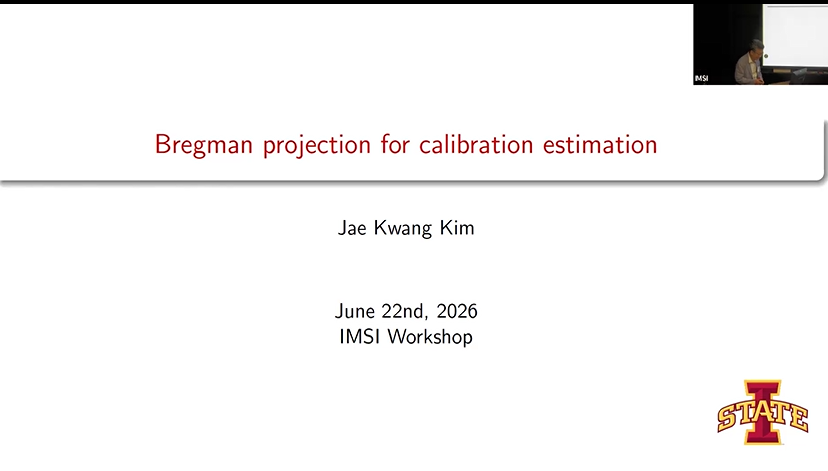
Bregman Projection for Calibration Estimation
Jae-Kwang Kim
June 22, 2026
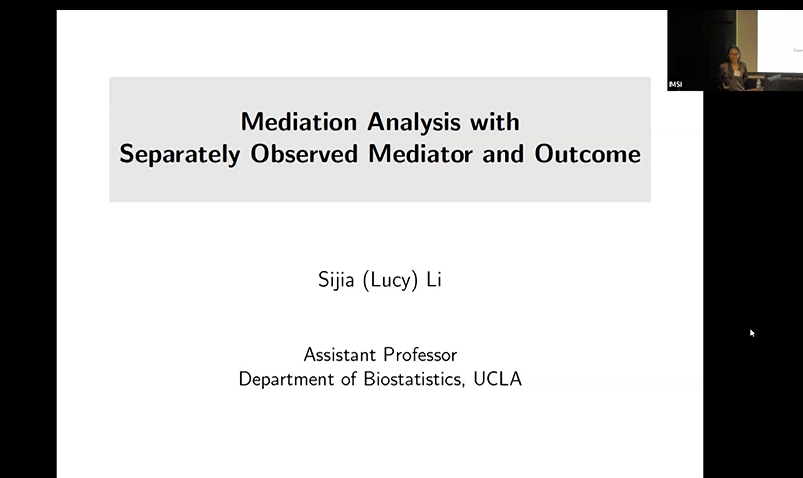
Semiparametric Mediation Analysis with Separately Observed Mediator and Outcome under Unmeasured Confounding
Sijia Li
June 22, 2026
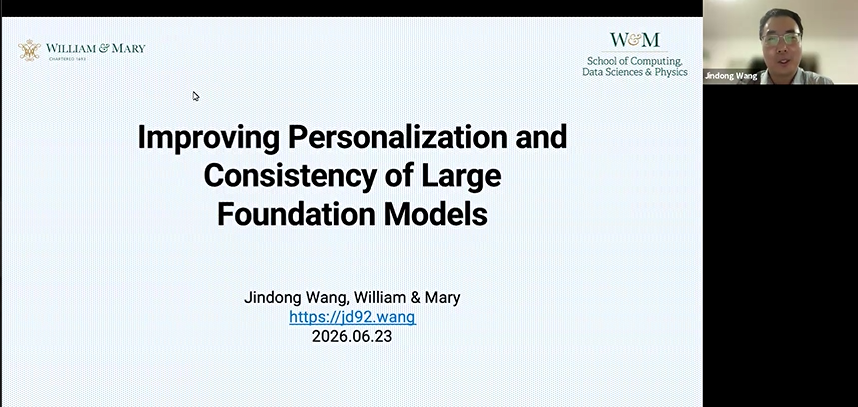
Improving Personalization and Consistency of Large Foundation Models
Jindong Wang
June 23, 2026
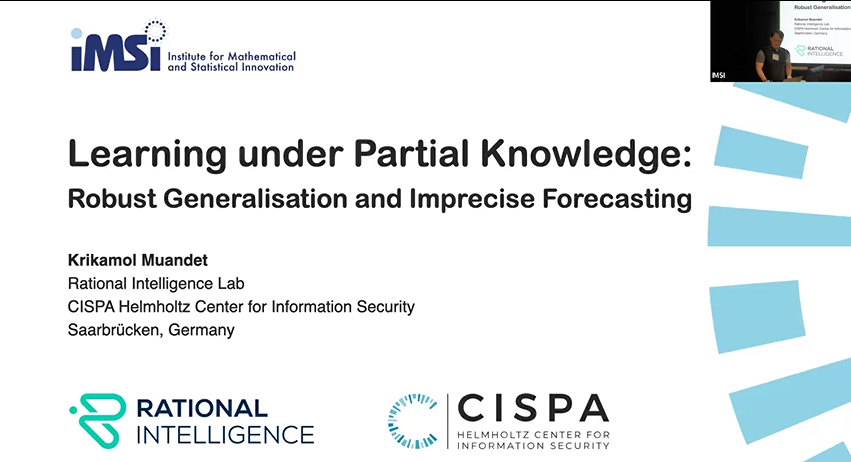
Learning under Partial Knowledge: Robust Generalisation and Imprecise Forecasting
Krikamol Muandet
June 23, 2026

Variance Reduction and Adaptive Sampling in Reinforcement Learning with Verifiable Rewards
Tong Zhang
June 23, 2026
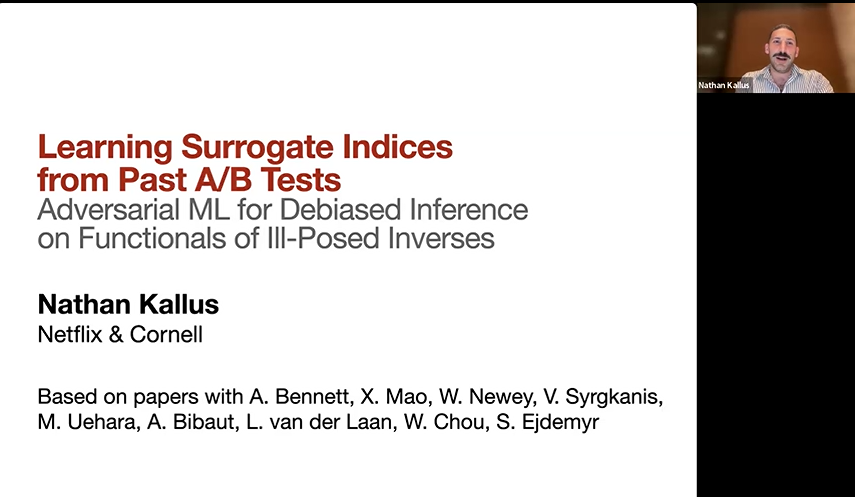
Learning Surrogate Indices from Historical A/Bs: Adversarial ML for Debiased Inference on Functionals of Ill-Posed Inverses
Nathan Kallus
June 23, 2026
Lightning Talks Session One
Lightning Talks 1
June 23, 2026
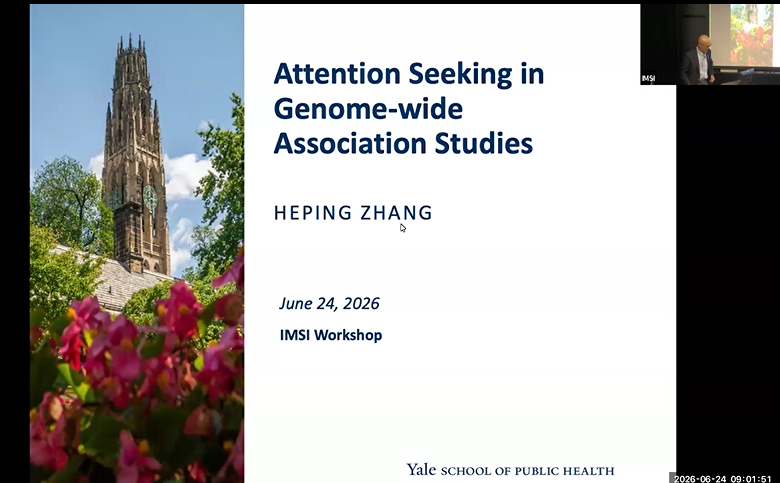
Attention Seeking in Genome-wide Association Studies
Heping Zhang
June 24, 2026
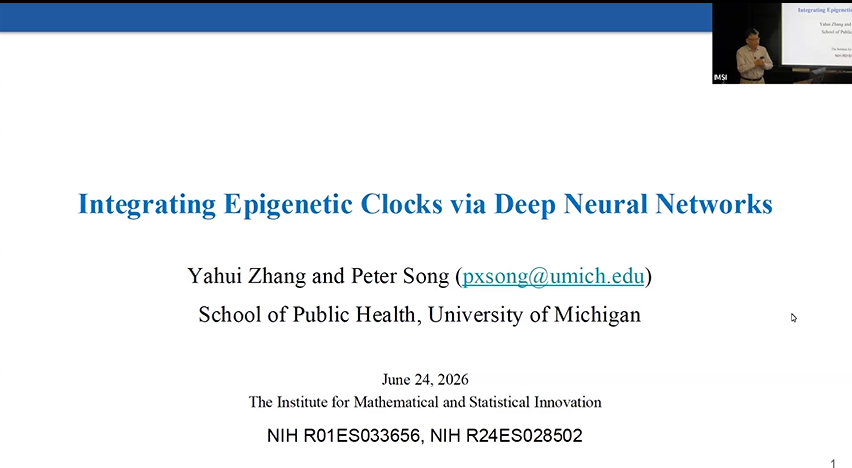
Integrating Epigenetic Clocks via Deep Neural Networks
Peter Song
June 24, 2026
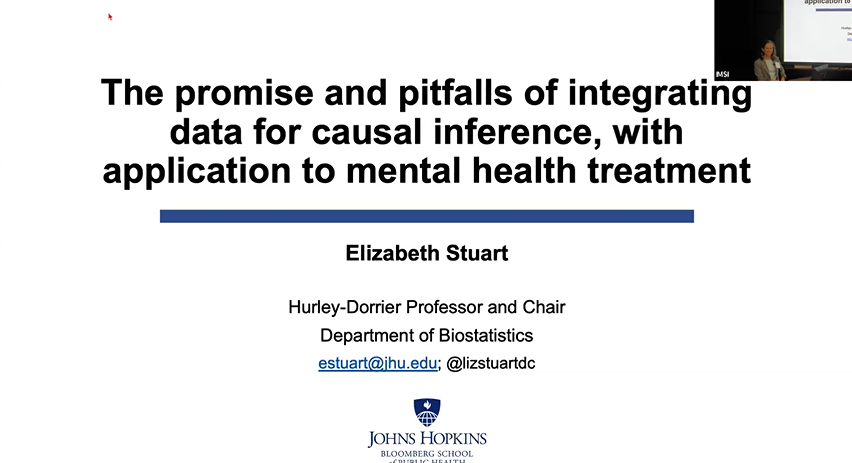
The Promise and Pitfalls of Integrating Data for Causal Inference, With Application to Mental Health Treatment
Liz Stuart
June 24, 2026
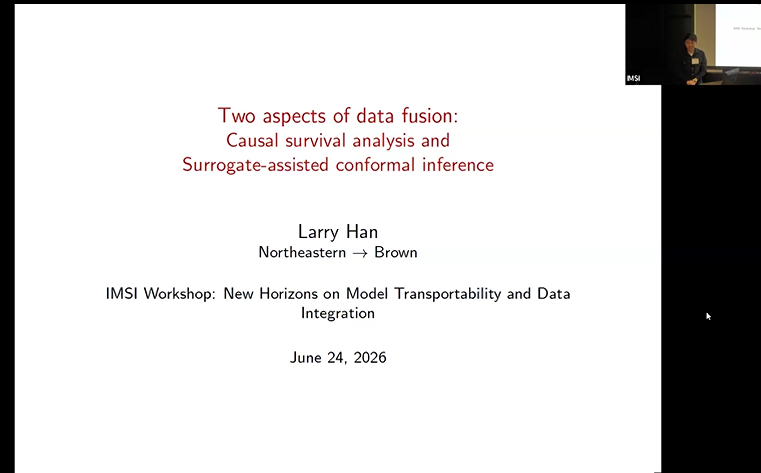
Targeted Data Fusion for Region-Specific Survival Effects in the AMP HIV Prevention Trials
Larry Han
June 24, 2026
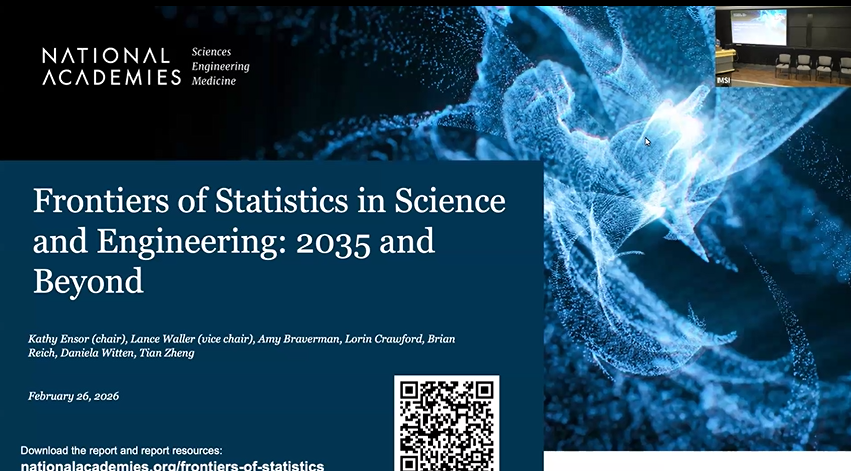
Panel: National Academies Report on “Frontiers of Statistics in Science and Engineering: 2035 and Beyond”
Panel
June 24, 2026
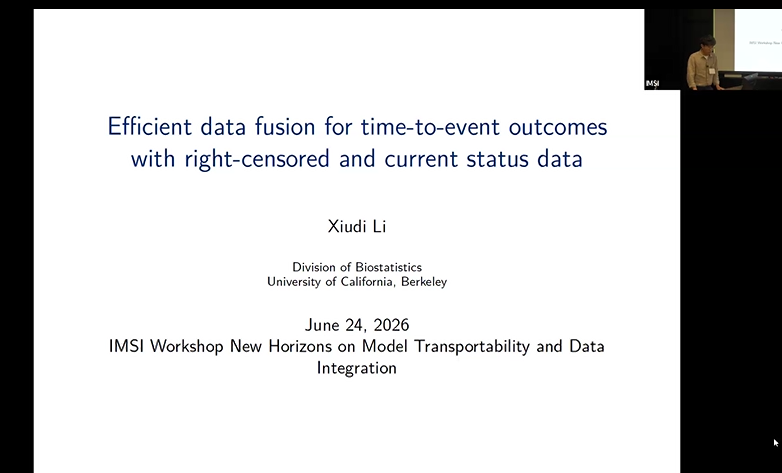
Efficient Inference for Time-to-Event Outcomes by Integrating Right-Censored and Current Status Data
Xiudi Li
June 24, 2026
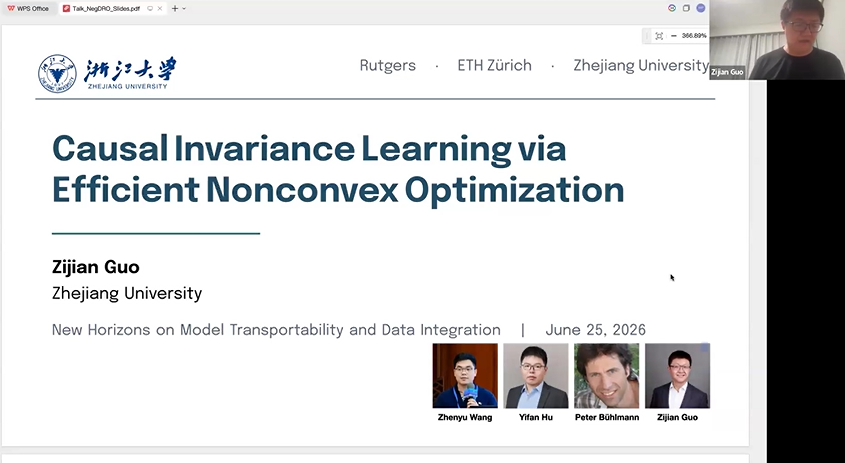
Causal Invariance Learning via Efficient Nonconvex Optimization
Zijian Guo
June 25, 2026

Designing Multi-Site Studies for External Validity: Site Selection via Synthetic Purposive Sampling
Naoki Egami
June 25, 2026
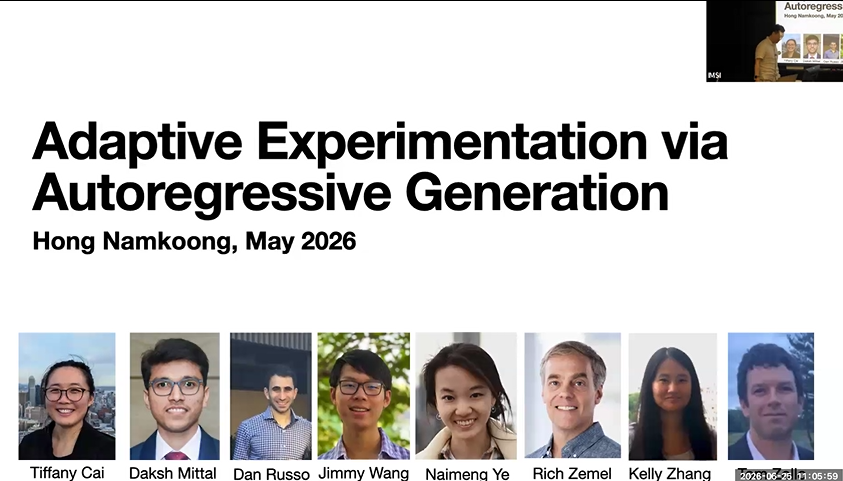
Adaptive Experimentation via Autoregressive Generation
Hongseok Namkoong
June 25, 2026

Lightning Talks Session Two
Lightning Talks 2
June 25, 2026
Adaptive and Efficient Learning with Block-wise Missing and Semi-Supervised Learning
Ying Wei
June 25, 2026
Transporting Causal Effects Beyond Common Support
Harsh Parikh
June 26, 2026
Beyond Exchangeability: Distribution-Shift-Aware Integration of External Control Data in Randomized Trials
Jiawei Shan
June 26, 2026